 Pro Ski USA
 Pro Ski Canada

 English
 Deutsch
 Slovenščina
On this page
- Low-impact: your feet stay on the platform, so there is no landing shock.
- Trains the lateral plane — the direction most gym and running training ignores.
- Legs, glutes and core work together; intensity is set by ropes and tempo.
- Up to 1,000 kcal/hour at high intensity — the real figure depends on body weight, resistance and tempo.
- Recommended by physiotherapists; used for knee, hip and back rehabilitation.
- After an injury or with a medical condition, talk to your doctor or physiotherapist first.
Low-impact, not low-effort
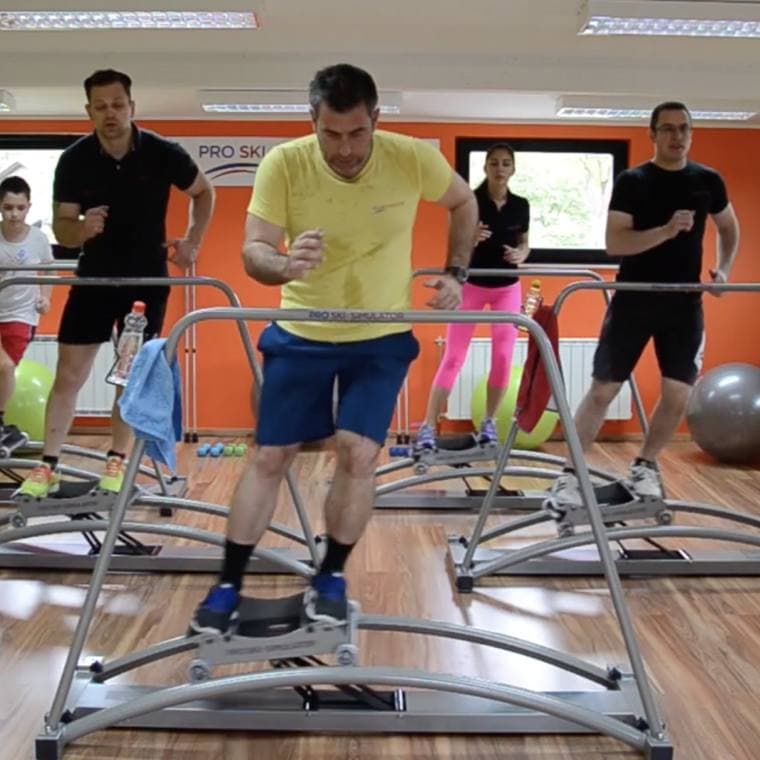
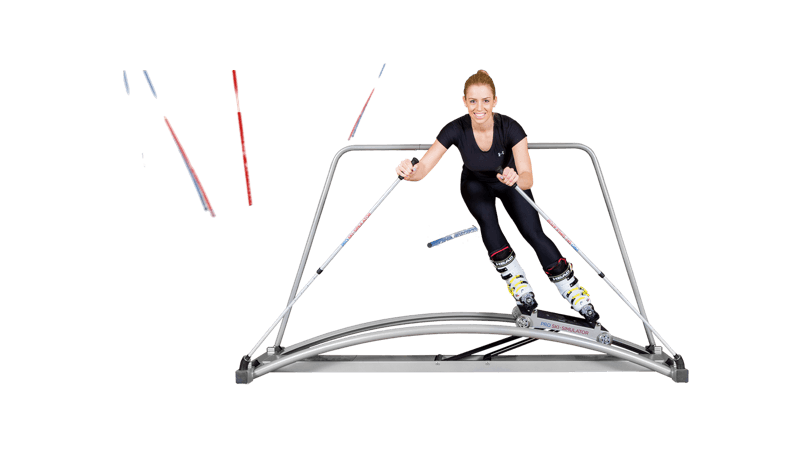
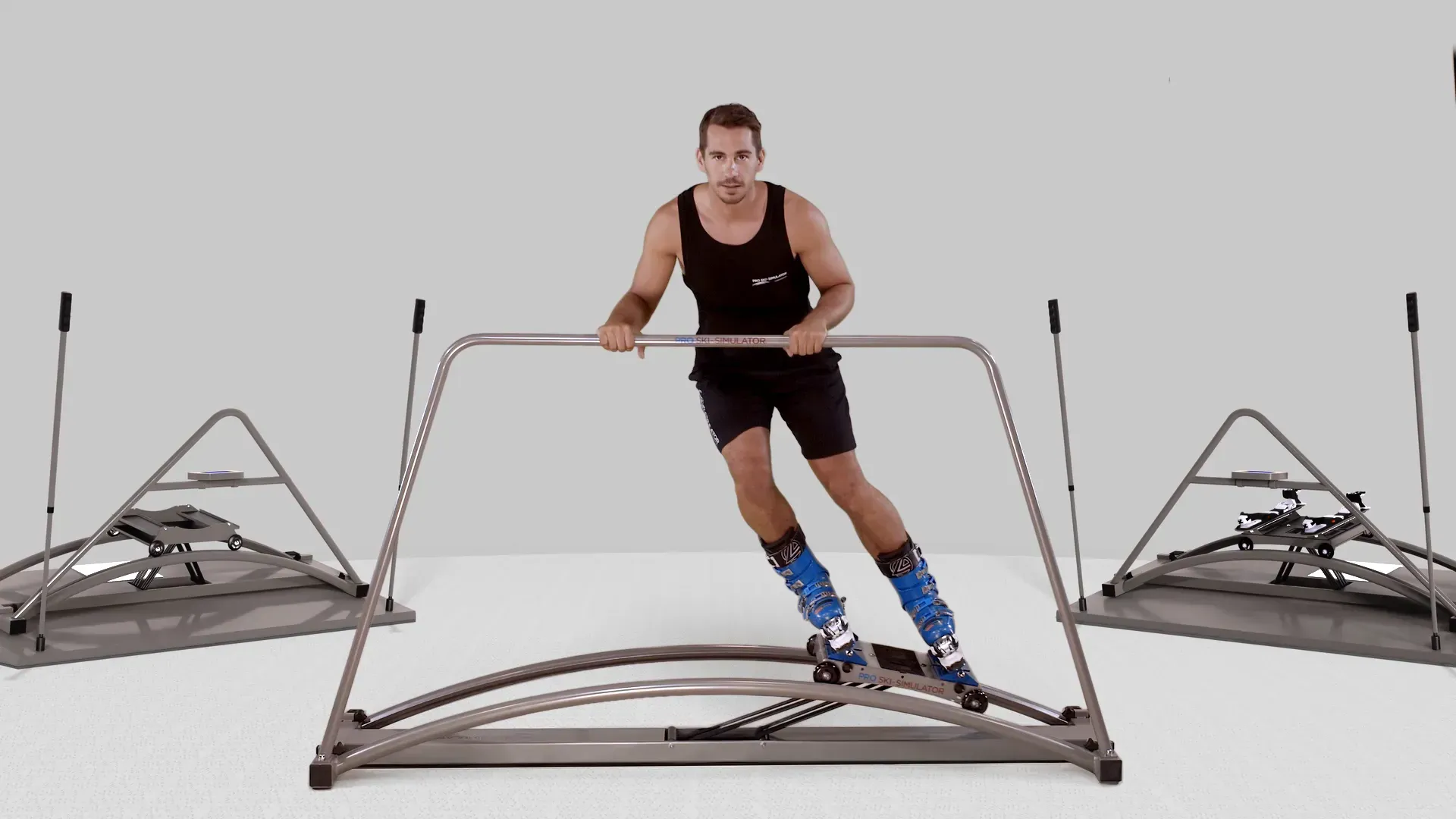
Running, jumping and many team sports load the body through impact: every stride lands with a force several times body weight. Training on a ski simulator is different. Your feet stay on the platform the whole time; the load comes from pushing against the elastic ropes and controlling the cart as it returns. Force builds smoothly and releases smoothly, without a landing.
That makes the machine attractive to people who want hard training without the pounding — runners on a rest week, skiers coming back from a knee problem (with their physiotherapist’s approval), older adults and heavier beginners. Don’t mistake low-impact for easy, though: with enough ropes and tempo, a session on a Pro Ski is as demanding as you want it to be.
The muscles you train
A carved turn is a whole-body movement, and so is every push on the machine. The main contributors:
- Quadriceps — hold the flexed stance and extend the outside leg into each push. They are the muscles that burn on a long run, and the ones the machine trains most directly.
- Glutes, especially the gluteus medius — stabilise the hip sideways and drive the lateral push. Weak hip stabilisers are linked to knees collapsing inwards.
- Adductors and abductors — the inner and outer thigh muscles that control side-to-side movement. Most gym machines barely touch them in this way.
- Hamstrings and calves — share the work of the stance and keep the ankle stable on the tilting platform.
- Core — the obliques and deep trunk muscles keep the upper body quiet while the legs travel, and transfer force between them.
- Feet and ankles — balance on the platform, especially in trainers on the Sneakers module.
Heart and lungs: cardio on your terms
At a quick tempo with moderate resistance, the machine is a cardio workout: large muscle groups working rhythmically for minutes at a time raise the heart rate quickly. Because intensity is controlled by ropes and tempo, the same machine works for a gentle 20 minutes at a talking pace or for hard intervals — 30 seconds fast, 30 seconds easy — that leave you breathless.
A hard session burns up to 1,000 kcal/hour. How much you burn depends on body weight, resistance and tempo, so a gentle session burns far less. A heart-rate monitor gives you a better picture of your own effort than any headline figure.
Balance, coordination and body awareness
Every turn asks the body to balance on a moving platform, shift weight to one side, hold an edge and come back. That trains proprioception — the sense of where your body is and how it is moving — and the reactive balance that helps on uneven ground as well as on snow. For children it’s a playful way to build coordination; for older adults, balance training is one of the recommended elements of staying active.
Joints, rehabilitation and injury prevention
Pro Ski simulators are recommended by physiotherapists and used for knee, hip and back rehabilitation. Resistance and range of movement can be set precisely — few ropes and short travel, or more of both — so the physiotherapist decides how much load the session carries. Any use after an injury or operation should be planned with your physiotherapist or doctor: the machine is a training tool, not a medical device.
For healthy skiers the argument is prevention. Many ski injuries happen late in the day, when tired legs lose control of the skis. Arriving on the first day of the season with stronger quadriceps, hips and core — and a movement pattern that is already automatic — is the most practical way to ski the last run as well as the first.
Benefits for children
Children learn movement by doing it, and a ski simulator gives them a rhythmic, whole-body game with a clear goal. It builds leg strength, balance and coordination that carry over to every sport — and it teaches the ski turn before their first day on snow. Short sessions of ten minutes work best, always supervised; the Junior frame and rope set are sized for them.
How much is enough?
Health guidelines for adults recommend 150–300 minutes of moderate activity a week, or 75–150 minutes of vigorous activity, plus muscle-strengthening work on two or more days. Three 25-minute sessions on the machine cover a good part of that, and with more than 1,500 possible exercises there is room to vary them. Certified instructors are available worldwide if you want guidance. For skiers, two or three sessions a week in the six weeks before the season make a noticeable difference to how the legs feel on the first days. Our training guides have plans for beginners, families and racers.