 Pro Ski USA
 Pro Ski Canada

 English
 Deutsch
 Slovenščina
On this page
Key facts
- The printed manual comes in the box; owners also find the PDF in their account.
- Two people to lift the frame — the Power weighs 48 kg assembled.
- Children always train under supervision.
- Care: silicone spray on the rails, a quick rope check before each session.
What’s in the box
Packed, the Junior measures 125 × 68 × 25 cm (35 kg), the Classic 178 × 70 × 30 cm (42 kg) and the Power 220 × 70 × 30 cm (50 kg); the Professional arrives on a pallet of 195 × 55 × 137 cm (175 kg). Inside you’ll find:
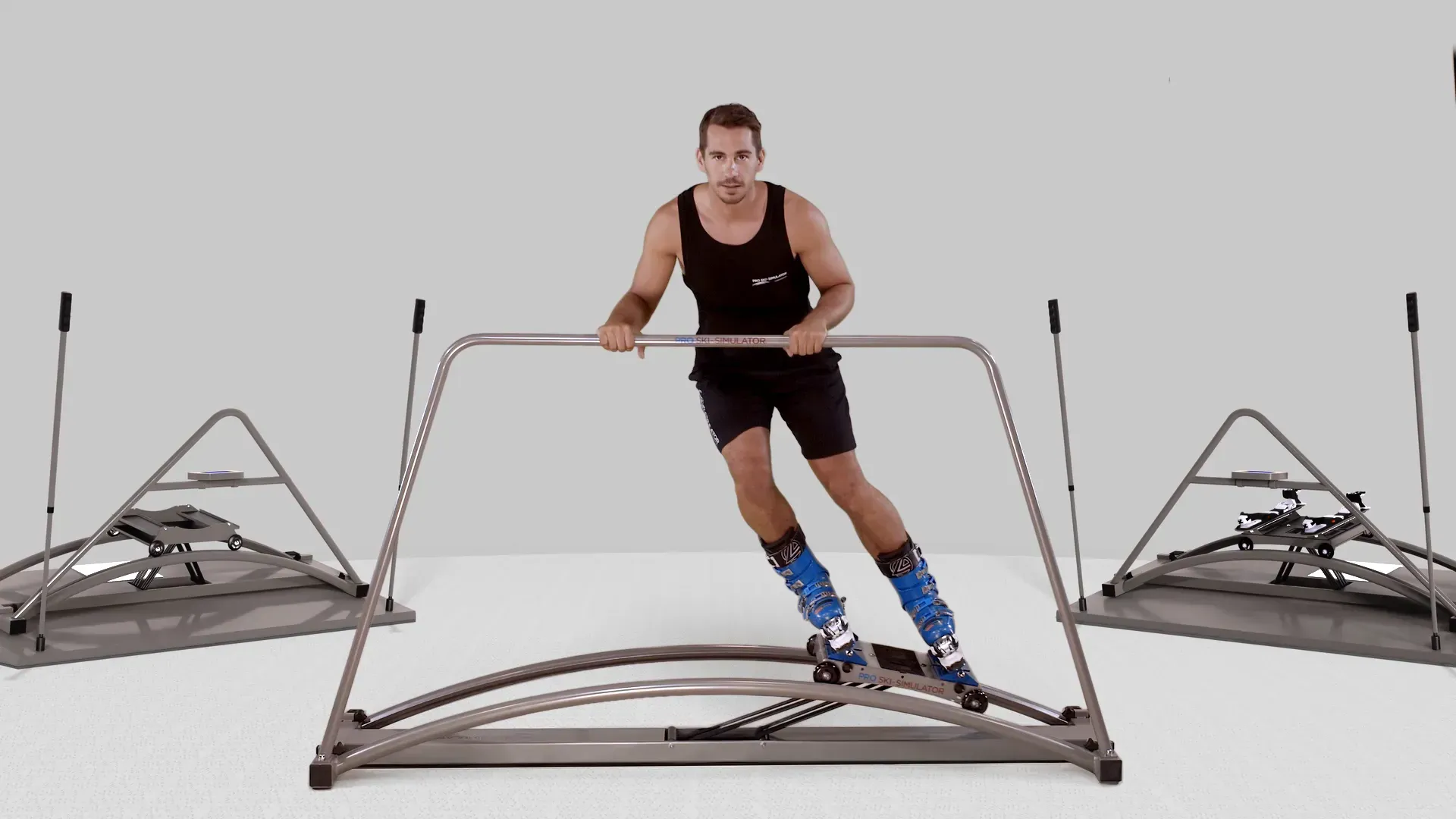
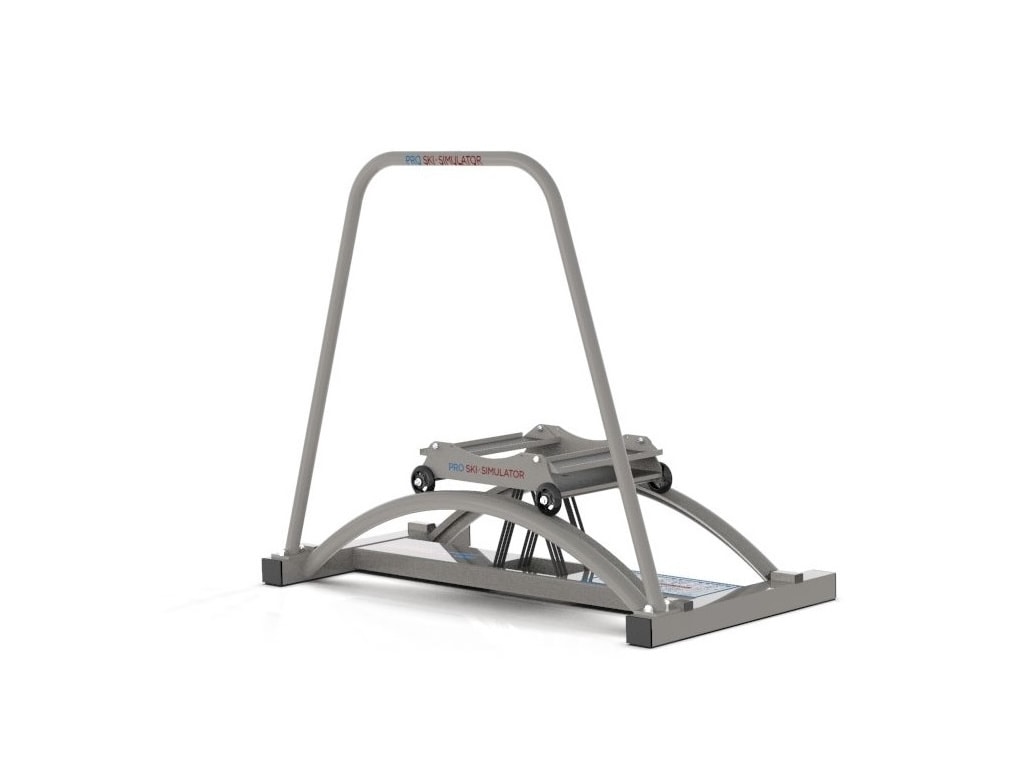
- The frame parts and the upright hand holder
- The cart — fixed B-type or all-in-one, depending on your order
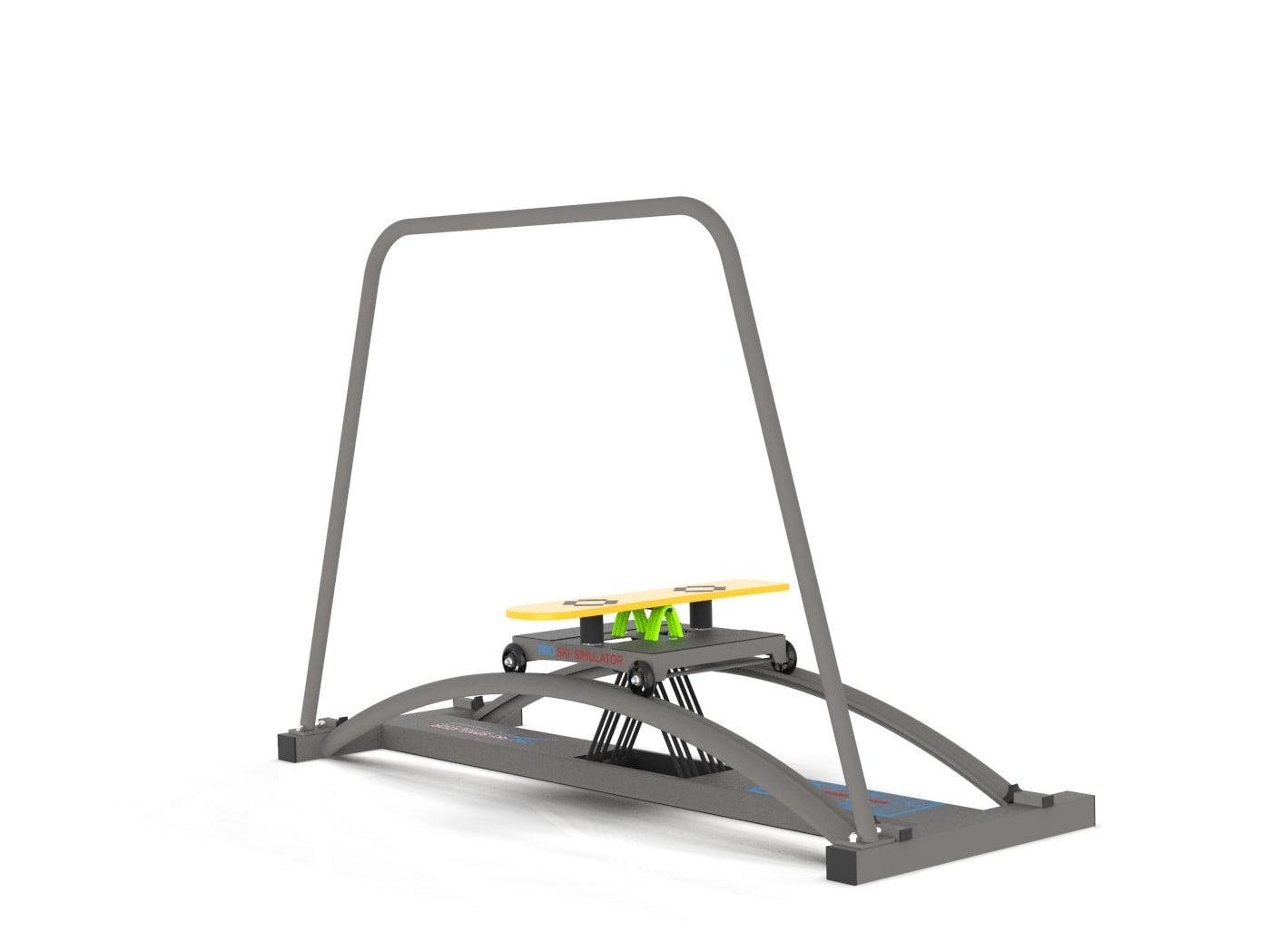
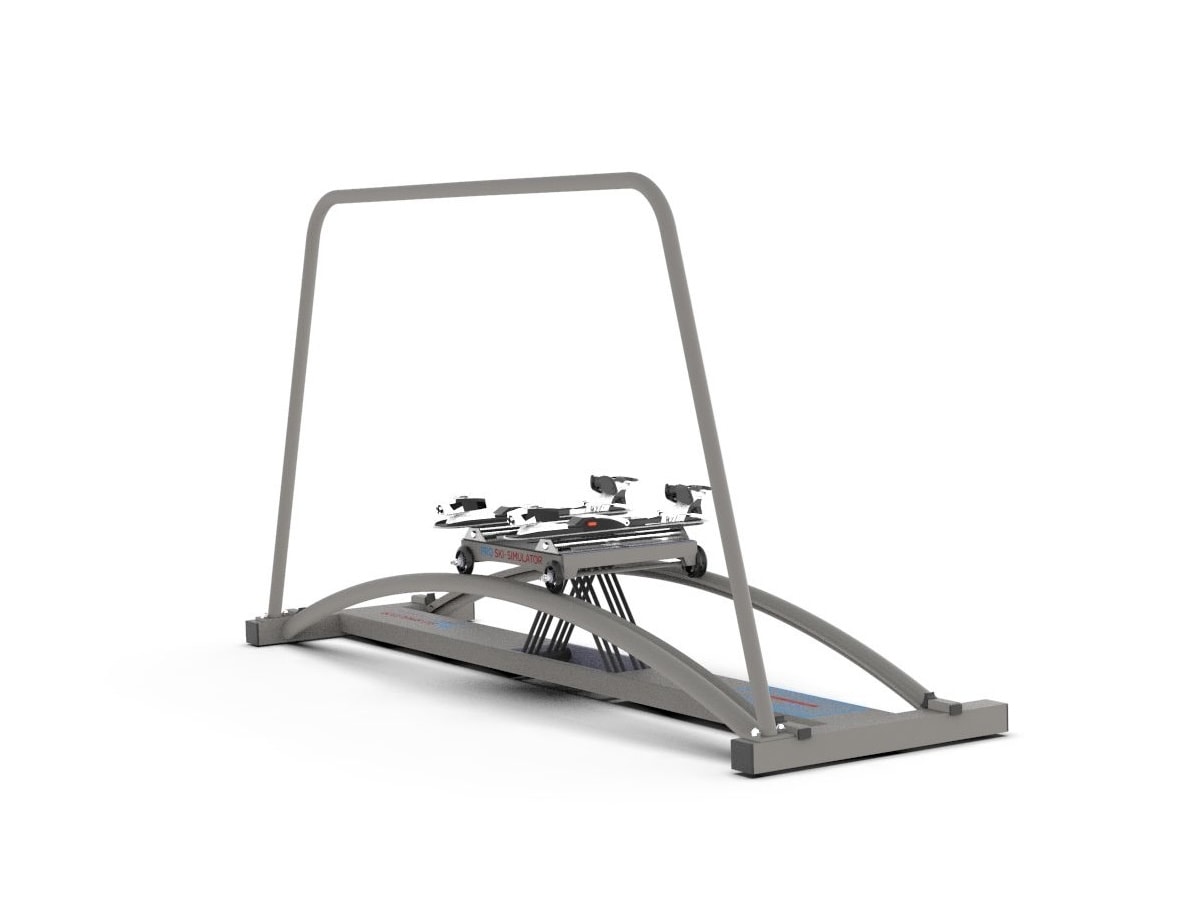
- Your discipline module(s): Sneakers pedals, Snowboard deck and/or Ski boots module
- The elastic rope set matched to your frame (Junior 6 × 1.0 m, Classic 6 × 1.5 m, Power 8 × 2.0 m)
- Any accessories you ordered — poles, phone holder, bottle holder, transport wheels
- Access to your free training video in your account
Assembly, step by step
These are the main steps; always follow the manual for your model, which has the exact parts and torque figures.
- Unpack and check. Lay the parts out on a blanket or the cardboard and check them against the parts list.
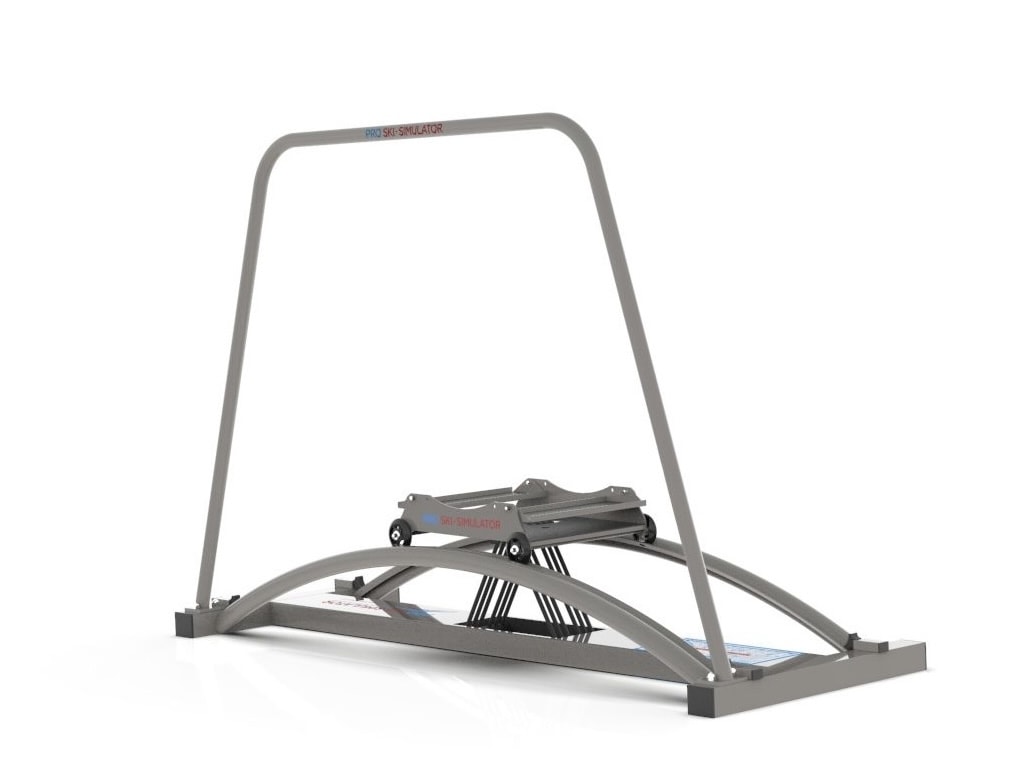
- Build the base. Connect the curved rails and cross members of the frame; tighten the screws hand-tight for now.
- Mount the hand holder. Fit the upright holder to the front of the frame, then tighten all frame screws fully.
- Place the cart. Set the cart onto the rails and check that it rolls freely from end to end.
- Fit the module. Mount the pedals, snowboard deck or ski-boot module on the cart. On the all-in-one cart, set the feet width.
- Attach the ropes. Clip the elastic ropes between cart and frame, the same number on each side. Start with few.
- Final check. Roll the cart through its full travel by hand, check every rope sits correctly, then take your first easy turns.
How much space you need
Allow for the machine itself plus room to move: the cart and your body travel to both sides, and you need space to step on and off.
| Frame | Assembled L × W × H | Weight |
|---|---|---|
| Junior | 125 × 68 × 105 cm | 33 kg |
| Classic | 173 × 68 × 125 cm | 40 kg |
| Power | 219 × 68 × 125 cm | 48 kg |
| Professional | 192 × 130 × 110 cm | 143 kg |
| SKI FIT 360 | 173 × 80 × 125 cm | 45 kg |
Floor and placement
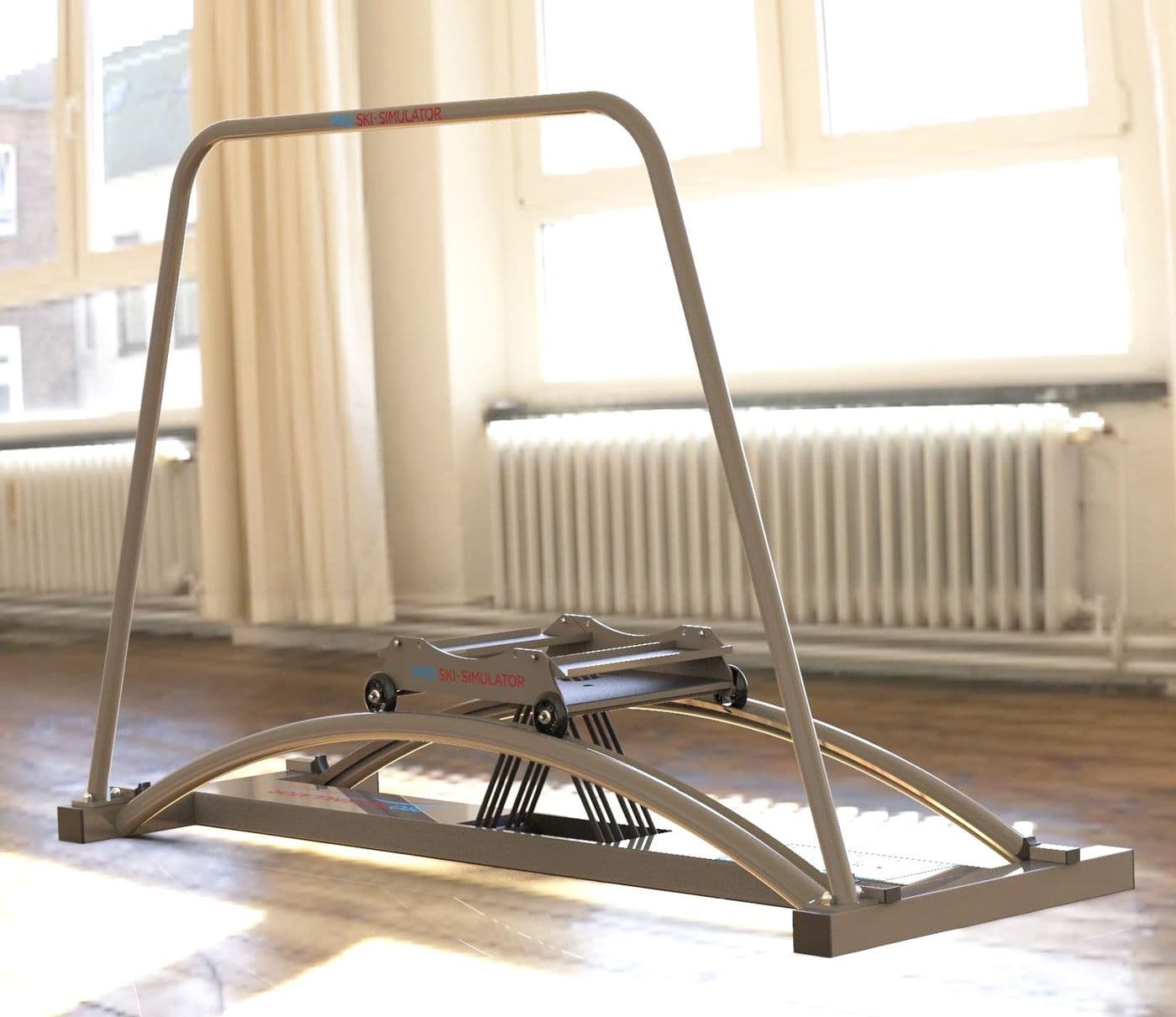
- Use a level, firm floor. On parquet or tiles, a mat protects the floor.
- Keep furniture, radiators and glass out of the travel zone on both sides.
- In an apartment, plan for the floor area in the table above; the machine needs no power socket.
- With transport wheels fitted, you can tip the machine up and roll it away after training.
Safety rules
- Children train only under adult supervision, and only on a rope setting that suits them.
- Keep children, pets and objects out of the cart’s path while someone is training.
- Check the ropes before each session. Replace any rope that is frayed, cracked or noticeably slack.
- Never stand on the frame, the rails or the hand holder — only on the module.
- Step on and off with the cart centred and stationary.
- Wear closed training shoes on the Sneakers module; train in properly buckled boots on the Ski boots module.
- Use the machine that fits the rider: the Junior is for children up to 145 cm and shorter adults; the Professional is for users from 170 cm, up to 120 kg.
- Stop if you feel pain or dizziness. After an injury, ask your physiotherapist first.
Maintenance
| When | What to do |
|---|---|
| Every session | Look over the ropes; check the cart rolls freely. |
| Monthly | Wipe the rails and apply silicone spray; check screws are tight. |
| Each season | Check the cart wheels for wear; replace worn ropes as a set. |
Spare rope sets, cart wheels and silicone spray are in the accessories shop. Spare parts ship from our workshop in Slovenia, and your 2-year warranty is handled directly by the manufacturer. Elastic ropes are consumables and not covered by the warranty.