 Pro Ski USA
 Pro Ski Canada
 English
 Deutsch
 Slovenščina
On this page
What actually transfers to snow?
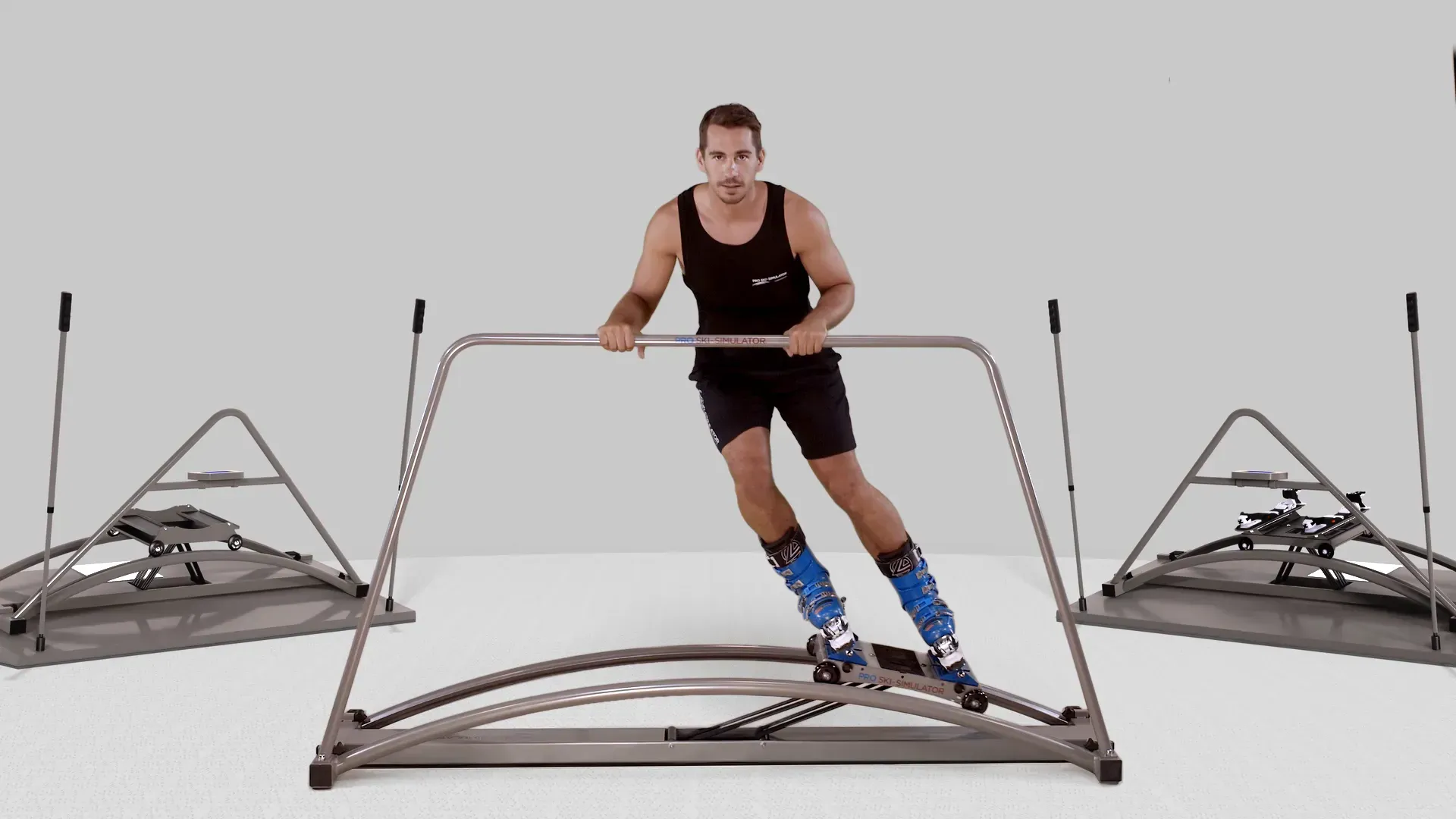
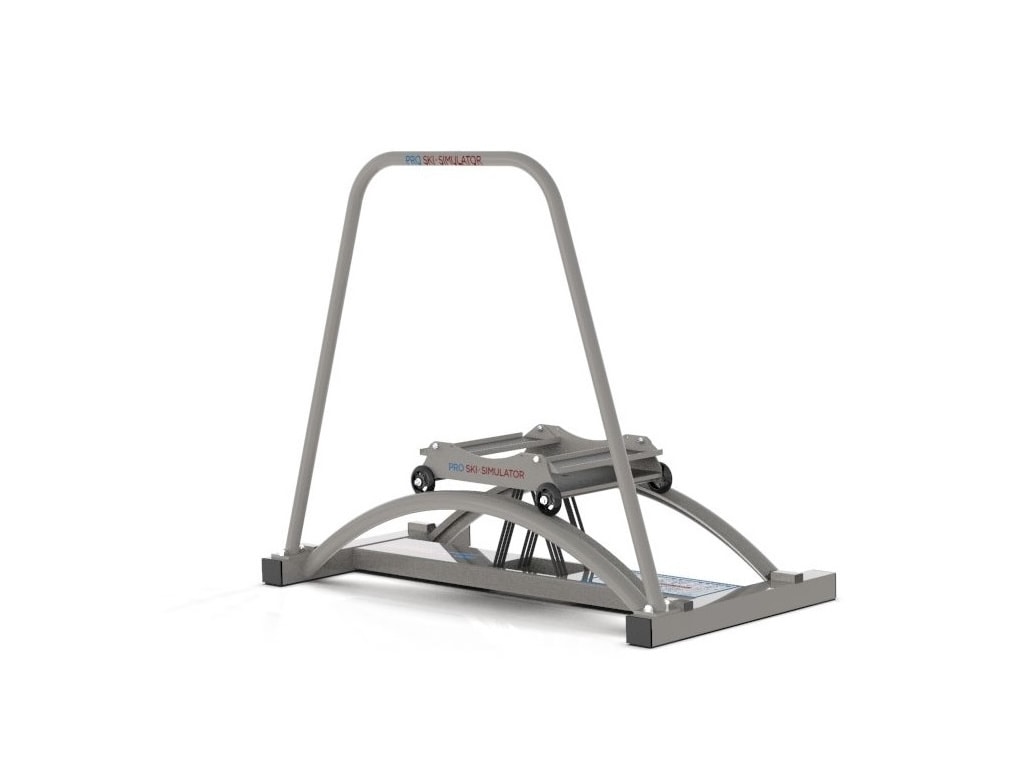
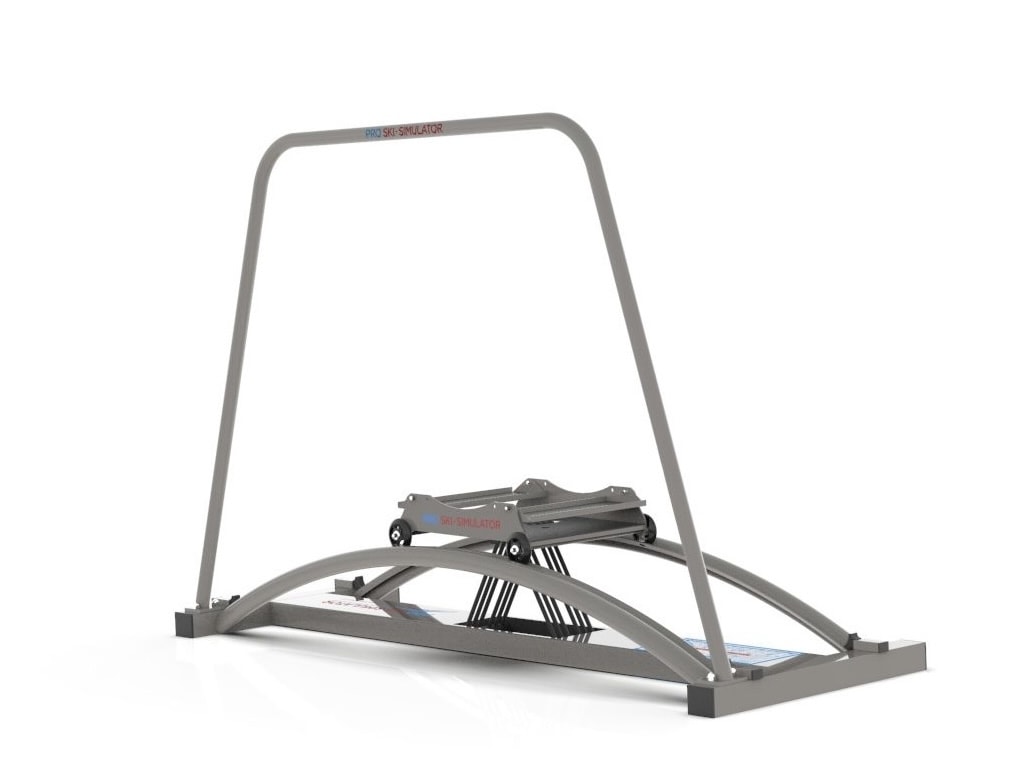
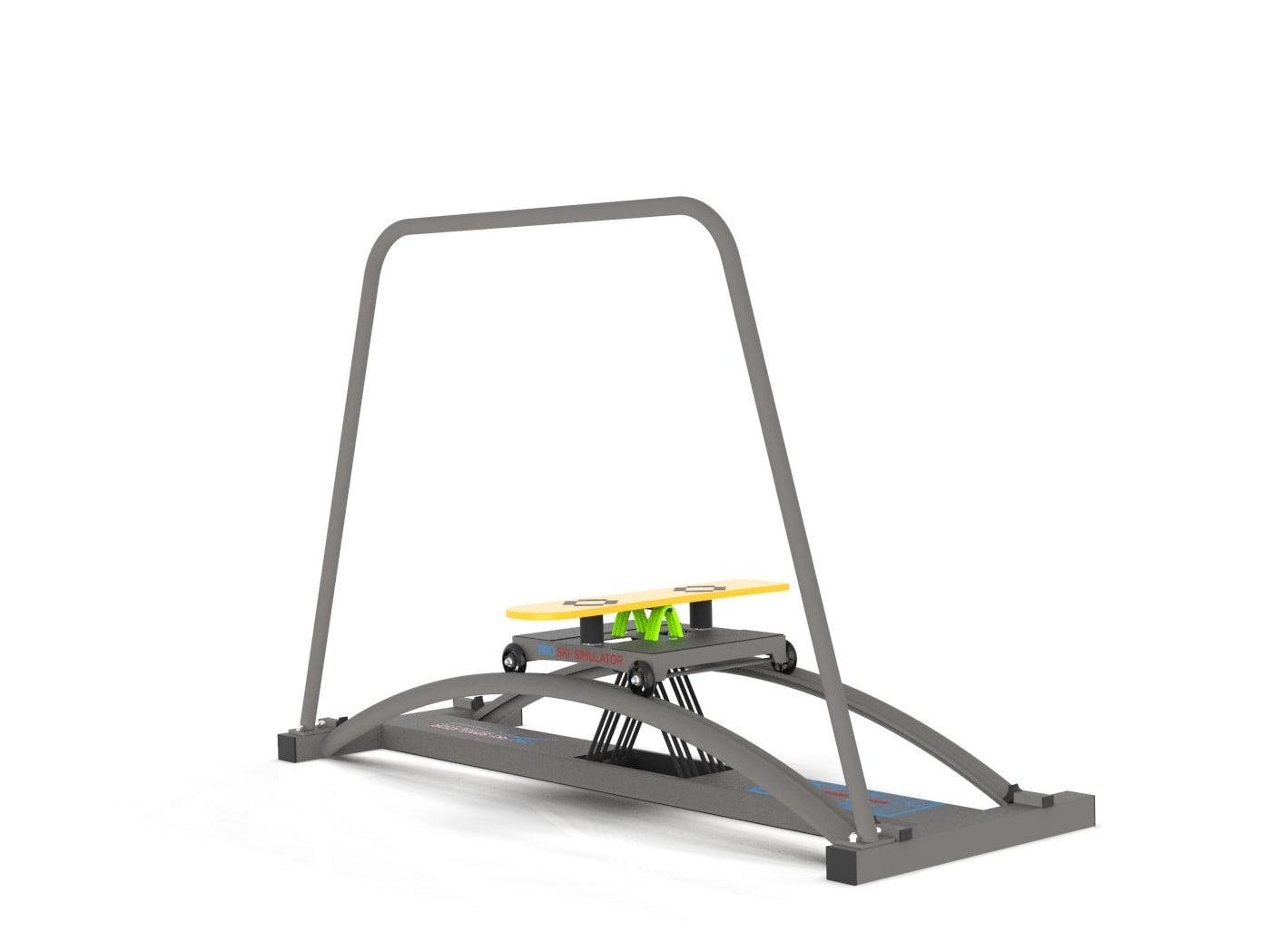
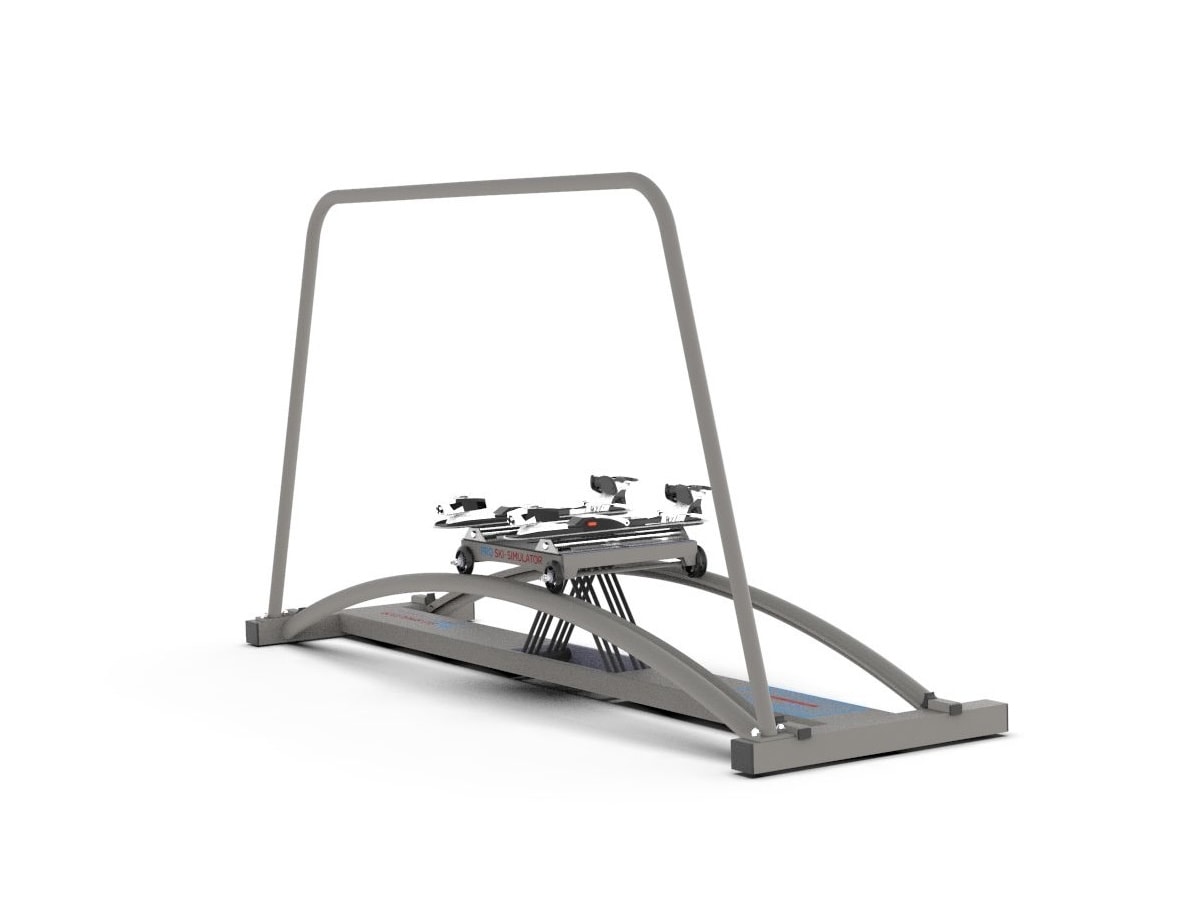
Skiing is, to a first approximation, a repeated lateral movement executed with precise body positions under load. That pattern — weight shift, edge-to-edge rhythm, knee and hip angulation, a braced core over a working lower body — is a motor pattern, and motor patterns are built and kept by repetition. This is the part a simulator trains directly: the platform's curved travel and progressive elastic resistance reproduce the load-and-rebound cycle of linked carved turns (the mechanics, in detail), so every session is dozens to hundreds of clean repetitions of the pattern. It's also honest strength work: the same session trains the legs, glutes and core in skiing's own movement, without impact.
Three groups feel this most clearly. Beginners and children arrive on snow with the basic movement already grooved — the ski-school weeks that are normally spent discovering weight shift get spent skiing. Returning seasonal skiers skip the annual "first day is a warm-up day" tax, because the pattern didn't fade over summer. And racers use it for what dryland has always been for: technical volume at intensities and repetition counts that snow time is too scarce and expensive to fund — the ski racing simulator page describes that training.
What doesn't a simulator replace?
No lateral trainer gives you speed, terrain reading, snow feel, fear management, or the tactical craft of an actual slope — the things only mountain days teach. A simulator won't make a beginner an expert by itself, and we won't tell you otherwise. What it changes is the quality of your mountain days: you arrive with the movement pattern and the specific conditioning already in place, so on-snow time converts to actual skiing instead of re-learning. Think of it the way a golfer thinks of a practice net or a boxer a heavy bag: not the sport, but the highest-value rehearsal of the sport's core movement.
Is it a real workout even if I don't care about technique?
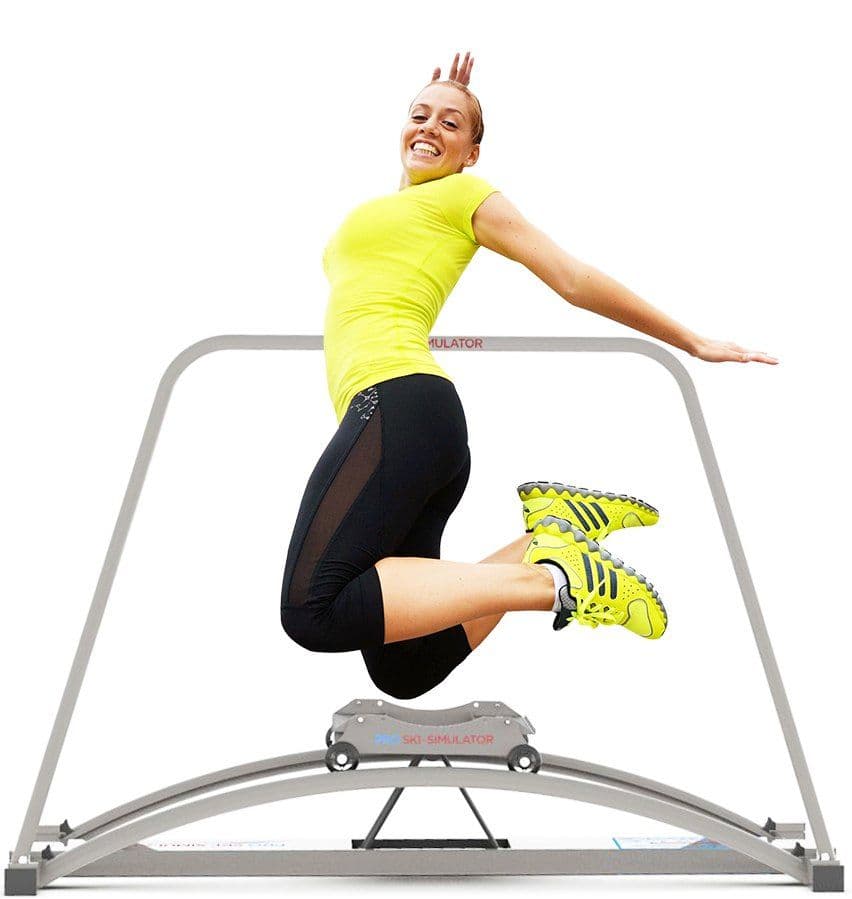
Yes — and some buyers train on it who barely ski. Interval sets against firm elastic resistance are genuine lower-body and core conditioning, and the movement is low-impact by nature: lateral, smooth, no jumps, no jolts. The full fitness picture — muscles, calories, joints and rehabilitation — is the subject of our health benefits guide.
FAQ
Will a ski simulator make me a better skier?
It will make the movement of skiing better — rhythm, positions, specific strength — which is most of what "better skier" means below expert level. It won't teach terrain, speed or snow feel; those still cost mountain days. The combination (pattern from the machine, application on snow) is the point.
Is it good for beginners, or only for good skiers?
Arguably best for beginners: the platform constrains the movement so you rehearse the right pattern from repetition one, with a hand support and resistance dialed to featherlight. Kids' version of this argument: the kids ski simulator page.
Do professional skiers really use lateral trainers?
Lateral trainers are an established category of dryland race training — clubs and squads run them for programmable technical volume.
What's the catch?
Two, honestly. It trains one (central) family of movements, not all of skiing — see above. And the fixed-cart models can never be upgraded, so buy the right configuration the first time.